Digital Photography News and Digital Camera Reviews
Showing posts with label SLR. Show all posts

Digital SLR Camera - Sony Alpha A350

Sony is about to ship its latest α (alpha) series digital SLR camera - the Sony Alpha DSLR-A350. Announced in January 2008, the DSLR-A350 will feature a 14.2 megapixel CCD sensor for exceptional picture quality. The Sony A350 digital SLR camera will also feature Sony's Quick AF Live View technology for fast auto-focusing that allows continuous shooting using the camera's 2.7 inch LCD screen.

The Sony Alpha A350 comes Sony's advanced BIONZ image processor and the Super SteadyShot image stabilization technology to aid shooting in low-light situations. The A350 is compatible with all Sony α (alpha) and Minolta Maxxum zoom lens. The A350 features a slimmer design for easier handling and an improved user interface, making it attractive to first-time digital SLR camera buyers. The Sony A350 digital SLR camera is priced at a MSRP of $799.99 on Sony.com

Digital SLR Camera - Sony Alpha A350

Sony Alpha A350 Digital SLR Camera

With incredible 14.2 MP detail, Sony's α (alpha) DSLR-A350 raises the bar. This model pushes the envelope, setting a new standard of excellence for step-up digital photographers shooting both family memories and fine-art photos. Live Preview in a large 2.7" LCD screen links you and your subject-and you'll have special features like super-quick AF response, continuous shooting at 2.5 fps while you see your subject in the viewfinder, Creative Style modes for quick recall of custom settings, and in-camera Super SteadyShot® image stabilization that reduces blur for every Sony, Carl Zeiss® and legacy Minolta a-mount lens.

SAN DIEGO, Jan. 30, 2008 – Sony is bringing live-view shooting to its digital SLR camera line with today’s introduction of a 14.2-megapixel (alpha) DSLR-A350 camera and a 10.2-megapixel α (alpha) DSLR-A300 model. Both cameras feature new technologies that make picture taking faster, easier, and more familiar for first-time DSLR users.

Quick AF Live View System

They both offer Sony’s new “Quick AF Live View” technology so you can frame photos on the camera’s LCD without sacrificing auto-focusing speed common to other live-view systems.

Sony’s innovative Pentamirror Tilt mechanism directs light to a dedicated live view image sensor, enabling fast and responsive TTL phase-detection auto-focusing, even during live view.

Eliminating the focus delay of other systems, the new models are equally responsive whether using live view or optical viewfinder.

With its two sensor design, Quick AF Live View can even continuously focus-track the subject and provide live view during burst shooting, helping you capture that special moment.

Taking further advantage of Quick AF Live View is the models’ variable angle 2.7-inch Clear Photo LCD ™ screen. This makes it easy to frame scenes from high or low positions difficult to reach when using an eye-level viewfinder.

With Live View and an adjustable LCD, the cameras do not need to be in front of the user’s face, allowing parents, for example, to maintain eye-contact when photographing their children.

“Mainstream users stepping up to DSLRs are looking for a similar experience to their point and shoot cameras, but without compromise in speed or performance” said Phil Lubell, director of marketing for digital cameras at Sony Electronics. “Quick AF Live View gives these new models a familiar shooting style without compromising speed – ideal for the growing market of first-time SLR users.”

Exceptional Image Quality

The new models produce images with fine detail, rich tonality and vibrant color due to their APS-C CCD image sensors and BIONZ® processing engine. To aid shooting in low light, Super SteadyShot® image stabilization enables shutter speeds 2.5 to 3.5 steps slower than otherwise possible, with every compatible Minolta Maxxum® and Sony α (alpha) lens (sold separately) attached to the camera.

High sensitivity operation at ISO 1600 and 3200 and very low noise are made possible by the user-selectable high-ISO noise reduction features. Sony’s D-Range Optimizer delivers suitable tonality and exposures with rich shadow and highlight detail, even under high contrast situations.

Powerful Performance, Easy to Use

The DSLR-A300 model can shoot about three continuous frames per second and the DSLR-A350 model can shoot up to two-and-a-half continuous frames per second, when using the optical viewfinder. Both are powered by the Bionz processing engine and supplied InfoLITHIUMTM battery for fast start-up times, quick response and long battery life – up to 730 shots per full charge when using the optical viewfinder and up to 410 shots per full charge in live-view mode.

Both models feature lighter, slimmer bodies for easy handling; an improved user interface; an automatic pop-up flash; a comfortable camera grip with an easily accessible mode dial; an anti-dust system to keep the CCD image sensor clean for spot-free pictures; and JPEG and RAW file format support. Both have a slot for CompactFlash™ Type I/II media cards.

An adaptor for Memory Stick Duo™ media cards is also available for the cameras and sold separately.

The new DSLR-A300 and DSLR-A350 cameras are compatible with a range of accessories, including the ergonomic Sony VG-B30AM vertical grip. Also available as an option is the new Sony HVL-F42AM flash unit. It offers advanced features such as automatic white balance adjustment with color temperature information, adjustable bounce angles, ADI metering and wireless remote operation to suit the needs of most photographers.

Price and Availability

The DSLR-A300 kit with a DT 18-70mm f3.5-5.6 standard zoom lens will ship in April for about $800. The DSLR-A350 camera body will be available in March for about $800, and the DSLR-A350 kit with a DT 18-70mm f3.5-5.6 3.9x zoom lens will be available for about $900 at the same time. Both models will be available at sonystyle.com, Sony Style® retail stores (www.sonystyle.com/retail), military base exchanges, and authorized dealers nationwide. Pre-orders begin online today at www.sonystyle.com/dslr.


Trusted Reviews - Sony Alpha A350 Digital SLR Camera Review

Digital SLR Camera - Nikon D60

Nikon's new D60 digital SLR camera is an entry-level SLR with excellent picture quality and ease-of-use. With 10.2 megapixels and the latest digital photography technologies incorporated into Nikon's well known D-series form factor, the Nikon D60 digital SLR camera is expected to appeal to enthusiasts and regular photographers making the jump the digital SLR.

The Nikon D60 digital SLR camera features Nikon's new EXPEED digital image processing concept that produces vibrant colors and excellent all-around performance to deliver stunning digital photographs. The D60 has a 2.5 inch LCD screen and offers Nikon's Vibrantion Reduction image stabilization technology to reduce blur. In addition, the Nikon D60 digital SLR camera has a fast 0.18 second start-up time that is sure to appeal to every photographer.

Nikon D60 Digital SLR Camera
New Nikon D60 Digital SLR Camera Makes Capturing Beautiful Pictures Fun and Easy

MELVILLE, N.Y. (Jan. 28, 2008) – Nikon, Inc., today introduced the new D60 digital SLR camera, which provides consumers with stunning picture quality and versatility in an easy-to-use, compact camera design. The D60 joins Nikon’s award-winning line of D-series digital SLR cameras and shares a form factor similar to the D40 – Nikon’s smallest D-SLR camera ever. With 10.2 effective megapixels and a wealth of innovative and user-friendly features, the D60 enables both photo enthusiasts and those new to digital SLR photography to capture incredible images like never before.

“The Nikon D60 makes stepping up to digital SLR photography easy for anyone, but is also a wonderful choice for photo enthusiasts looking for remarkable performance in a compact package,” said Edward Fasano, general manager for marketing, SLR System Products at Nikon, Inc. “This model, like the wildly popular Nikon D40, greatly simplifies use and builds confidence in the user. With a host of innovative features, such as a visually intuitive LCD information display, Nikon’s highly regarded EXPEED image processing concept, new dual dust reduction countermeasures, in-camera editing tools and exciting creative options, the D60 enhances the picture-taking experience for picture-takers of all skill levels.”

Users will immediately appreciate the D60’s fast 0.18-second start-up time and split-second shutter response, which combine to eliminate the frustration of shooting lag – a common issue with many point-and-shoot digital cameras. With a fast and accurate autofocus and the ability to shoot continuously at up to three pictures-per-second, the D60 faithfully captures pictures that other cameras often miss. The D60 does all this while delivering extraordinarily vivid and detailed pictures, ensuring that fleeting expressions, special moments and memorable events are captured beautifully.

Packaged with Nikon’s new AF-S DX NIKKOR 18-55mm f/3.5-5.6G VR image stabilization lens, the D60 camera and lens outfit delivers striking image sharpness. What’s more, Nikon’s proprietary VR (Vibration Reduction) image stabilization technology also dramatically reduces blur caused when shooting handheld pictures, especially in low light.

The camera’s 10.2 megapixel CCD sensor delivers crisp, high-resolution images with astounding color and clarity, while Nikon’s advanced 3-D Color Matrix Metering II ensures that images are exposed beautifully and automatically, even in challenging lighting conditions. Additionally, Nikon’s new digital image processing concept, EXPEED, delivers smooth tones and accurate color for vibrant pictures and flattering portraits.

The D60 also offers consumers comprehensive in-camera functionality, such as Active D-lighting. Through this innovative Nikon feature, the camera can, with the option selected, further optimize shadow and highlight detail—as pictures are taken. Shots that once required adjustment with photo editing software can now go straight to the printer, bypassing the computer altogether.

For added fun and creativity while reducing or helping to eliminate time spent manipulating pictures later, the D60’s In-camera Retouch Menu enables users to accomplish a wide variety of tasks without a computer. The D60 offers new in-camera editing capabilities, including adjustable cross-screen star effects, color-intensifying filters as well as D-lighting, Red-eye correction, Image Trim and more. The D60’s Stop-Motion Movie mode is a D-SLR first that enables users to create stop-animation movie clips from a series of as many as 100 consecutive JPEG picture files. More experienced photographers will also enjoy shooting in the lossless NEF (RAW) format, and then adjusting image parameters, such as size, format, and white balance, all within the camera.

While many cameras now feature a dust cleaning function, the D60 takes this idea one step further. In addition to offering an Image Sensor Cleaning function that quickly and silently shakes off specks of image degrading dust, the camera also minimizes the dust that can come into contact with the sensor through a unique Airflow Control System. This design works to channel particles away from the sensor with every click of the shutter, resulting in even further reduction of dust particles and the spots they can leave on pictures.

Ergonomically designed with intuitively placed controls, the D60 is a camera that’s compact and ready to go wherever life leads. It also features a new power conserving Eye Sensor that turns the big 2.5-inch color LCD monitor on and off automatically when the user alternates between taking pictures and reviewing camera settings.

A customizable LCD monitor user interface rounds out the D60’s convenient features, as users can create their own wallpapers and adjust color settings to adapt to their preferences. The D60’s design also supports Eye-Fi memory card functionality, enabling the convenient wireless transfer of images from the D60 to a computer, when using Eye-Fi memory cards.* Additionally, photos can be securely written to readily available SD cards, high-capacity SDHC cards and Eye-Fi memory cards, offering users a range of data storage options.

The D60 will be packaged with the 3x zoom AF-S DX NIKKOR 18-55mm f/3.5-5.6G VR lens and will be available throughout the United States beginning in February 2008. Pricing information will be available approximately 30 days prior to sales availability. For more information, please visit Nikon USA.

Photography Blog - Nikon D60 Digital SLR Camera Review
Digital Camera Info - Nikon D60 Digital SLR Camera Review

Digital SLR Camera - Nikon D3

Nikon's latest professional-class digital SLR camera, the Nikon D3, is indeed top-of-the-class, winning multiple awards and incorporating the latest digital camera technologies. Poised to revolutionize digital photography for advanced enthusiasts and professional photographers, the 12.1 megapixel Nikon D3 features one of the fastest startup time and shortest shutter lag of any digital SLR cameras.

With a MSRP of $4,999.95, the Nikon D3 is beyond most photographers, but for those who can afford it, is surely one of the best digital SLR cameras around. The Technical Image Press Association (TIPA) named the Nikon D3 the best professional digital SLR camera for 2008.

Professional Digital SLR Camera


Nikon D3 Digital SLR Camera

Revolutionizing Digital Photography


MELVILLE, N.Y. (AUGUST 23, 2007) - Eight years after Nikon's D1 camera changed professional digital photography forever, Nikon today introduced the D3 - a new digital SLR camera that is poised to once again revolutionize photography for professionals. The 12.1 effective megapixel D3 features Nikon's new FX-format CMOS sensor, measuring 23.9 x 36mm, which is nearly identical to the size of 35mm film. With the fastest startup time, shortest viewfinder blackout time, and shortest shutter lag of any digital SLR camera as well as the capability to shoot up to nine frames per second at full FX-format resolution, the D3 is the world's fastest digital SLR camera in its class.

Designed with sports photographers and photojournalists in mind, the Nikon D3 introduces an astounding list of brand new features and technologies that make it the most sophisticated and advanced Nikon digital SLR to date. In addition to the new FX-format CMOS sensor, the D3 incorporates Nikon's new EXPEED Image Processing System that is central to the blazing speed and processing power needed for many of the D3's new features.

Images taken with the D3 reflect exceptional overall quality, broad tonal range and depth, along with extremely low-noise throughout its normal ISO range of 200 to 6400. By setting the camera to its built-in options of Lo-1 or Hi-2, the ISO range of the camera can be expanded to the equivalent of ISO 100 or ISO 25,600 respectively, offering unmatched versatility in practically any shooting situation.

The D3 also features an entirely new 51-point auto focus system with Nikon's 3D Focus Tracking feature and two new LiveView shooting modes that allow photographers to frame a photograph using the camera's high-resolution LCD monitor. The D3 uses the world's first Scene Recognition System to greatly enhance the accuracy of auto focus, auto exposure and auto white balance detection in the camera by recognizing the subject or scene being photographed and applying this information to the calculations for the three functions.

"Nikon is proud and excited to once again respond to the needs of professional photographers by introducing the D3. Nikon engineers have successfully combined ultra high-speed shooting capabilities and handling with outstanding low-noise image quality, offering professional photographers an ideal tool for a broad range of shooting disciplines," said Edward Fasano, general manager for Marketing, SLR Systems Products, at Nikon Inc. "Sports, commercial and press photographers are increasingly demanding higher ISO sensitivity, better resolution, wider dynamic range and a familiar depth-of-field in relation to picture angles. With the D3, Nikon is excited to deliver a solution that represents an ideal unification of unsurpassed image quality, high-speed operation and professional durability, without compromise. Nikon fully expects the D3 to positively affect the photographic community in a way that hasn't been seen since the introduction of the Nikon D1."

Nikon's Digital Camera Sensor Formats

Nikon's digital SLR cameras based on its DX-format sensor have been hugely successful and represent an excellent combination of high image quality, size and value. And while the DX-format has been widely accepted by professional photographers and photo enthusiasts around the world, there is an increasing demand among professionals for a digital SLR camera that features higher ISO sensitivity, wider dynamic range and offers the same relationship between picture angle and depth-of-field that were the hallmarks of the 35mm film format.

Responding to this demand, Nikon has developed the D3 as its first digital SLR camera that features the Nikon FX-format CMOS sensor to meet the real-world requirements of its professional customers. The D3 delivers full resolution 12.1 megapixel images at up to nine frames per second when used with conventional AF-Nikkor lenses. When used with DX Nikkor lenses, the D3 automatically switches to the DX-format mode that uses a cropped portion of the sensor to generate 5.1 megapixel resolution images. While in this mode, the D3 automatically masks the portion of the viewfinder that will not be photographed and enables the capability to shoot up to 11 frames per second.

Both Nikon FX and DX-formats provide their own advantages, and Nikon recognizes that both formats are necessary in order to satisfy its diverse customer demands. Based on this recognition, Nikon will strengthen its D-SLR lineup with the addition of the D3 FX-format SLR camera and a broadened assortment of Nikkor interchangeable lenses, while continuing to develop and market high-performance DX-format cameras and lenses.

The Most Intelligent Nikon Digital Camera Ever

The D3 introduces a range of innovative technologies and features that significantly improve the accuracy, control and performance professional photographers can get from their equipment. Nikon's exclusive Scene Recognition System advances the use of Nikon's acclaimed 1,005-segment sensor to recognize colors and light patterns that help the camera determine the subject and the type of scene being photographed, before an image is captured. This information is also used to improve the accuracy of auto focus, auto exposure and auto white balance detection functions in the D3. For example, the camera can track moving subjects better in all directions and by identifying them it can also automatically select focus points faster and with greater accuracy. It can also analyze scene highlights and more accurately determine exposure, as well as infer light sources to deliver more accurate white balance.

The D3 incorporates Nikon's new Multi-CAM 3500FX auto focus module that features an intelligent array of 15 cross-type sensors and 36 horizontal sensors. These sensors can either be used individually or in groups, with the option for Single Area AF mode and Dynamic AF modes using groups of either 9, 21 or all 51 focus points. The system also features 3D Focus Tracking with automatic focus point switching that takes advantage of all 51 AF points as it uses color and light information to accurately track the subject. Nikon's new Scene Recognition System and improved focus algorithms also contribute to the impressive performance of the new 51-point AF system.

Nikon's new Picture Control System makes it easy for users of all experience levels to select and apply adjustments to how their pictures are rendered and create optimized settings to suit their individual preferences. The same settings produce consistent picture tone, even when using different camera bodies. The Picture Control System offers four basic setting options – Standard, Neutral, Vivid and Monochrome. These can be directly modified for easy adjustment and customization of image parameters, such as sharpening, tone compensation, brightness and saturation. Photographers can customize and store up to nine customized options in the D3 and export up to 99 to a CF memory card, enabling photographers to share settings among multiple D3 cameras.

Taking a cue from the popularity of Nikon's D-Lighting technology, the D3 features a new Active D-Lighting mode that, when enabled, provides remarkable real-time highlight and shadow correction with optimized image contrast. Active D-Lighting produces broader tone reproduction in both shadows and highlights by controlling highlights and exposure compensation while applying localized tone control technology to achieve a more pleasing level of contrast across the entire image. And because the advantages of Active D-Lighting are applied as images are captured, image editing time can be shortened.

The D3's LiveView feature offers two modes for confirming subjects and composition on the new 920,000-dot, high-resolution 3-inch LCD monitor while shooting. The Tripod mode is designed for precise focus and accuracy when the camera is on a stable platform and the subject is not moving. In this mode, the camera focuses on the subject using focal-plane contrast and any point on the LCD screen can be selected as the focus point for the picture. The second mode, called Handheld mode, allows photographers to use the camera's conventional TTL focusing system, with all 51-points and 15 cross-type points available. When using this mode, the camera activates focusing immediately when the shutter button is pressed, to ensure accurate focus.

The Fastest Digital Camera in its Class

The D3 has the fastest reaction times of any camera in its class. Its shutter release time lag is only 37 milliseconds, and its start-up time is approximately 0.12 seconds. It is capable of continuously shooting approximately nine frames per second in full resolution with FX-format, up to 64 consecutive frames in JPEG, Normal compression. For NEF (RAW) files, the D3 can shoot up to 20 or up to 17 consecutive frames depending on whether it is set to 12-bit or 14-bit images. When using a DX-format lens, the camera automatically switches to DX-format mode, adjusting the resolution of the camera to 5.1 megapixels. In the DX-format mode, photographers also have the opportunity to increase the speed at which the camera can take pictures by limiting the auto exposure and going up to 10 frames per second or limiting both auto exposure and auto focus and going up to 11 frames per second.

Refined Ergonomics and Usability

The D3 reflects Nikon's most streamlined, functional and aesthetically pleasing layout in a digital SLR camera, all designed so photographers can take pictures with less fatigue, greater accuracy and comfort.

The camera's viewfinder provides virtually 100 percent coverage for accurate framing, while an ultra-high definition, 920,000-dot VGA LCD screen on the rear of the camera displays images with vivid color and clarity. The 170-degree wide viewing angle makes composing shots using the LCD screen in LiveView mode easy. The D3 also features a unique Virtual Horizon digital level sensor that indicates the camera's alignment relative to the true horizon on the rear LCD screen or in the viewfinder.

The D3 also features two CompactFlash card slots that can be used for consecutive recording (overflow), simultaneous recording (backup), separating recording of RAW and JPEG files or even copying pictures between the two cards. Images can be displayed directly from the camera to a high-definition monitor using the camera's HDMI port and an optional cable.

The D3 is designed for professional use in demanding conditions. The exterior of the D3 is crafted of magnesium alloy and the camera's shutter mechanism is tested to 300,000-cycle releases. The 3.0-inch LCD is strengthened with tempered glass and the D3's comprehensive array of rubber gaskets and seals protect vulnerable entry points from dust and moisture.

Visit the Official Nikon D3 Digital SLR Camera Website

Full Review - Sony Alpha A200 Digital SLR Camera

Sony Alpha A200 Digital SLR Camera
Sony unveiled the Alpha A200 Digital SLR Camera, designed for entry-level photographers at CES 2008 in Las Vegas.

LAS VEGAS(CES BOOTH), Jan. 6, 2008 – Sony is advancing the digital SLR camera category for mainstream digital photographers with today’s introduction of the new α (alpha) DSLR-A200 camera.

The Digital SLR Camera-A200 model features upgrades influenced by the recently-introduced, enthusiast-class DSLR-A700 camera and replaces the former Sony DSLR-A100 model, which was Sony’s first in the digital SLR camera class.

The new model is designed to be faster, lighter and easier to use. Upgraded features include a wider, 2.7-inch Clear Photo LCD screen for easy playback viewing; a more compact body and an easily-accessible mode dial; an easy-to-use function menu (camera function display); improved noise control for higher quality images; an auto focus speed 1.7x faster than the previous digital SLR camera model; improved predictive control performance; quieter shutter sound; automatic pop-up flash; and a battery life indicator that displays the percentage of battery life remaining so you know exactly when to recharge.

As seen in all α (alpha) camera bodies, the Sony Alpha A200 digital SLR camera incorporates Super SteadyShot® image stabilization in the body to allow shooting at shutter speeds of 2.5 to 3.5 steps slower than otherwise possible – a benefit realized with every compatible lens attached to the camera. Compatible lenses encompass all Minolta Maxxum® mount lenses, in addition to Sony a (alpha) lens lineup - including Carl Zeiss® lenses.

“With the Sony Alpha A200 digital SLR camera, we are helping consumers capture high-quality images with advanced technology that’s practical and easy to use,” said Phil Lubell, director of marketing for digital cameras at Sony Electronics. “This model is an ideal step-up for point-and-shoot users who are looking for a camera that can capture virtually all of the photographs they want.”

High-Quality Digital Photographs

With its 10.2-megapixel (effective) APS CCD image sensor, the Sony Alpha A200 digital SLR camera continues to offer high-quality images by allowing more light to pass through to each pixel – increasing sensitivity, reducing noise, and providing greater detail.

Clean, reduced-noise signals are sent from the image sensor to Sony’s BIONZ processing engine, which processes data-rich picture information at high speeds and reduces picture noise in the RAW data stage before image JPEG conversion. The results are high-resolution, detailed images with rich tonal reproduction.

The Sony Alpha A200 digital SLR camera model supports JPEG and RAW file format support. It has a slot for CompactFlash Type I/II media cards. An adaptor for Memory Stick Duo™ media cards is sold separately as an accessory.

Get The Photo Results You Want

In addition to Super SteadyShot image stabilization for virtually blur-free photos, the new model incorporates Sony’s D-Range Optimizer (DRO). It helps you capture well-exposed images, especially when shooting high-contrast or backlit scenes that often lead to loss of highlight and shadow detail. Sony’s DRO modifies the range from highlights to shadows, including gain and contrast, through its in-camera hardware processing to produce more natural, evenly exposed pictures. The digital SLR camera’s image analysis technology studies the captured image data and instantly determines the best exposure and color tonality for the image before JPEG compression.

The BIONZ image processing engine powers the camera up immediately and the eye-start autofocus starts the focusing system before you even press the shutter. The Sony Alpha A200 digital SLR camera can shoot up to three continuous frames per second at 10.2-megapixels at the finest JPEG compression level.

As seen in previous α (alpha) models, the new model carries a static-free anti-dust coating on the CCD filter which is gently vibrated to dislodge any dust that might have collected each time the digital SLR camera is powered off.

Additionally, the Sony Alpha A200 digital SLR camera’s supplied lithium ion battery offers up to 750 shots per full charge.

Bright and Easy Digital Camera Playback

The Sony Alpha A200 digital SLR camera’s smaller, more compact body along with its wider, 2.7-inch Clear Photo LCD TM screen and a new on-screen navigation interface make it easier to carry and to use. The vibrant, easy-to-view screen features 230K-pixel resolution, an anti-reflection coating and glare-reducing layer assures vivid, accurate colors with a wide viewing angle, even in daylight. The on-screen navigation display shows camera settings and key shooting information in large, easy-to-read text. The Sony Alpha A200 digital SLR camera display’s orientation automatically switches from landscape to portrait position when the camera is turned on its side.

Accessories Expand Creative Possibilities

Sony is providing a full line of accessories for the model, including flashes, rechargeable battery packs and several carrying cases. An interesting addition to the Sony Alpha A200 digital SLR camera is the VG-B30AM ergonomic vertical grip equipped with the most essential controls for portrait orientation shooting. It also allows for the use of two InfoLITHIUM® batteries (sold separately) for up to 1,500 shots on a single, full charge.

The DSLR-A200K kit includes the camera body and a DT 18-70mm f3.5-5.6 3.9x zoom lens for about $700. The DSLR-A200W kit includes the camera body, the DT 18-70mm lens and a 75–300mm f4.5-5.6 lens for about $900. Both will ship in February 2008 and will be available at sonystyle.com, Sony Style® retail stores, military base exchanges, and authorized dealers nationwide.

Digital SLR Camera - Sony Alpha A200

Sony Alpha A200 Digital SLR Camera
The Sony Alpha A200 is an entry-level digital SLR camera with a 10.2 megapixel CCD image sensor and Sony's own Super SteadyShot image stabilization technology. It represents a step forward from its predecessor - the Alpha A100.

Although it lacks the advanced features of the enthusiast-class Sony Alpha A700 Digital SLR camera, the A200 holds its own against other DSLR's in its class. In fact, the Technical Image Press Association (TIPA) chose the Alpha A200 as the best entry-level digital SLR camera for 2008.

The Sony Alpha A200 also features a 2.7 inch LCD screen and automatic pop-up flash as well as an easily-accessible mode dial. Menu functions are also easily accessed in the Alpha A200 digital SLR camera. Sony's advanced BIONZ image processor also has improved tonal reproduction and reduced picture noise.

Visit the official Sony Alpha A200 Digital SLR Camera Webpage
Sony Alpha A200 Digital SLR Camera Press Release

Digital SLR Photography

How To Take Stunning, Lively And Ravishing Pictures

by Connie Fillmore


Photography is digital SLR photography, at least to any self-respecting photographer. Suggest otherwise, and he is sure to give you a piece of his mind and proceed to praise the virtues of digital SLR photography.

Digital SLR photography uses a digital SLR (Single Lens Reflex) camera that uses a movable mirror placed between the lens and the film to project the image on to a focusing screen.

Digital SLR photography churns out the most amazingly realistic photographs, in fact much better than the ones turned out by the conventional fixed lens cameras. But its prime appeal to photographers, both amateur and professional, is in the fact that he can work out a large amount of control over how his pictures end up as.

Digital SLR photography is all about customized photographs that are stunning to look at, to say the least. This is because the cameras come with extremely good lenses. This is why the discerning photographers are not miserly about getting a lens, frightfully expensive they may be.

However, digital SLR photography enthusiasts should never think that a swanky Nikon or a Canon is the passport to great photography. The apparatus notwithstanding, good photography depends a lot on the skills of the person brandishing the camera. The basics of digital SLR photography are not hard to pick up.

The first and foremost tip about digital SLR photography is to equip yourself with the nitty-gritty of lighting. If you are shooting outdoors during the day it is best to have the sun directly behind you. It is also essential that your subject also does not have to face the sun so that he has to squint. You should know that the best time to film landscapes, buildings and outdoor portraits is either dawn or the twilight hours.

If you want to impart the warmth of the rising or setting sun to your midday photo shoot, then a skylight or a warm filter is your key.

Tips to great digital SLR photography insist on maintaining control over the camera's flash property. To be precise, don't have your camera have the last word about where the flash should come on. Take the reins yourself and ensure that your photograph subjects are not lost in a maze of bright light.

Good photography, digital or analog, SLR or otherwise, is all about being able to use the filters right. You never know when that polarizer or the gradual filter or the skylight/UV filter might come to your rescue at times when the light situations are tricky.

The Macro Mode atop the camera just happens to be the most underrated and under-used feature. But unknown to many, this mode is great for taking enchanting close-ups of tiny objects.

Realistic and stunning digital photography is actually the norm with plethora of controls that come with modern day digital SLR cameras. And photography tips harp on tinkering with the controls to get a hang of the controls and the outcomes they produce.

Experimenting for instance, with really slow (30 seconds) extremely fast (1000th-8000th/second) shutter speeds can produce dramatic results. The ISO setting is another area for experimentation. In fact, high ISO values come in quite handy when you cannot use a flash in low light situations.

Get well up on your digital SLR photography tips and tricks and shoot at sight willingly.

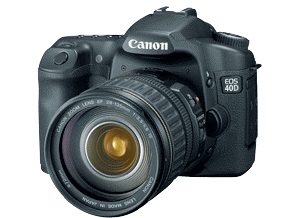
Full Review - Canon EOS D40 Digital SLR Camera


Canon announced the successor to the EOS 30D digital SLR camera in August 2007 - the EOS 40D. The EOS 40D features a 10.1 megapixel sensor along with the latest developments in digital SLR camera technology to produce images worthy of Canon.

Building on the success of Canon's perennially popular "prosumer" EOS 20D and 30D models, the EOS 40D advances the state-of-the-art for mid-range Digital SLR cameras, making it a natural first choice for advanced amateur photographers and entry-level professionals, and an ideal second body for more established photo pros. Indeed, given the level of feature upgrades and improvements, technological wizardry and user-requested creative controls, the Canon EOS 40D SLR's "prosumer" appellation may refer more to its accessible price point than to the exceptional quality, clarity and resolution of the images it creates.

From the camera's newly enhanced, 10.1-megapixel CMOS imaging sensor (designed and manufactured by Canon) and its proprietary and super-efficient DIGIC III image processor, to its completely redesigned autofocus sensor and fast, 6.5 frame-per-second (fps) continuous shooting capability (for bursts of up to 75 Large/Fine JPEGs or 17 RAW images), the EOS 40D SLR puts the fun in functionality and makes serious photo business a positive pleasure.

Indeed, at 6.5 fps, no Digital SLR in the EOS 40D mid-range class and price category has so high a continuous shooting capability, making it ideal for shooting – and actually capturing – speed-sensitive outdoor and wild-nature shots as well as a wide variety of action and sports scenes. The speed of the EOS 40D SLR comes from Canon's balanced combination of its latest processor, DIGIC III, DDR SDRAM high-speed memory, four-channel-per-line sensor readout, and two separate motors for shutter and mirror operation.

"This newest member of Canon's Digital SLR family takes mid-range Digital SLRs to exciting new heights with enhanced resolution and image quality, faster shooting and processing speeds and better overall functionality than ever before," stated Yuichi Ishizuka, senior vice president and general manager, Consumer Imaging Group, Canon U.S.A."The EOS 40D Digital SLR Camera incorporates many Canon innovations and advancements that differentiate our products from the competition, while respecting and reinforcing our long-standing traditions of providing superior value and innovative imaging technology."

Display's the Thing
The most easily visible upgrade on the EOS 40D Digital SLR is the camera's larger three-inch LCD screen (compared with the EOS 30D's 2.5-inch monitor). Still, size is only the beginning of the difference between these two cameras' displays. In order to increase viewing ease in outdoor conditions such as bright sunlight, Canon raised the brightness level of the EOS 40D camera's 230,000-pixel LCD screen, broadened the color gamut and narrowed the viewing angle from 170 degrees to a still wide 140-degree perspective in all directions. An added advantage of the larger-sized display is the ability to use a larger font size for text, making it easier to read setting and menu options on the screen. The camera's menu is organized in the same tabbed format as the EOS-1D Mark III Digital SLR.

Canon extends its "ease-of-reading" policy to the EOS 40D SLR's viewfinder as well. The upgraded viewfinder increases optical magnification from 0.90x to 0.95x, expands the viewing angle from 251 degrees to 264 degrees and raises the eye point from 20mm to 22mm.

Enhanced Durability
Recognizing the often rigorous shooting conditions encountered by professional and advanced amateur photographers, Canon design engineers made the EOS 40D SLR's magnesium alloy exterior even more ruggedly dependable than its predecessors with upgraded dust and weather resistant construction, particularly around the camera's connection ports, battery compartment and single-slot compact flash memory card door. Should the user inadvertently open the compact flash card door while the camera is writing to the card, a warning will pop up on the LCD screen and an open door "alarm" will sound, but the image(s) will continue writing to the memory card without interruption. The EOS 40D SLR also retains many of the outstanding features of the EOS 30D model, such as its fast 0.15-second initial start-up, its extremely durable shutter (rated up to 100,000 cycles), its top shutter speed of 1/8000 sec and 1/250 maximum X-sync flash shutter speed setting.

Improved Image Quality
Although it is based on the image sensor used in the EOS Digital Rebel XTi, the EOS 40D Digital SLR's 10.1-megapixel CMOS APS-C size image sensor has been significantly improved thanks to the use of larger microlenses over each pixel to reduce noise and expand sensitivity up to ISO 3200. The EOS 40D retains the model 30D camera's 1.6x focal length conversion factor (compared to full-frame digital image sensors or 35mm film) and is compatible with the full line-up of Canon EF lenses as well as the Company's expanding selection of high-quality, affordable EF-S lenses created specifically for Canon Digital SLRs with APS-C size image sensors.

Adding to the improved virtuosity of the images captured by the EOS 40D SLR is the camera's 14-bit Analog-to-Digital (A/D) conversion process. Able to recognize 16,384 colors per channel (four times the number of colors recognized by the EOS 30D SLR's 12-bit conversion capability), the EOS 40D camera is able to produce images with finer and more accurate gradations of tones and colors. The EOS 40D also incorporates the optional Highlight Tone Priority and High-ISO Noise Reduction functions first introduced earlier this year with the EOS-1D Mark III Professional Digital SLR.

DIGIC III
DIGIC III is the latest generation of Canon's proprietary image processing engine. DIGIC III technology ensures that the fine details and natural colors of the images are optimally recorded and, as an added bonus, is also responsible for the EOS 40D SLR's high-speed performance, faster signal processing and even its efficient energy consumption.

sRAW
In addition to retaining the RAW image capture capabilities of its predecessors, the EOS 40D SLR now offers a more manageable "sRAW" recording format. In sRAW mode, the number of pixels is reduced to one-fourth that of a standard RAW image and the file size is cut in half, while retaining all of the flexibility and creative possibilities associated with full-size, conventional RAW images.

Improved Autofocus and Exposure Control
While the EOS 40D SLR maintains the nine-point wide area AF coverage first introduced on the EOS 20D camera, Canon has made significant improvements to its speed, precision and functionality, minimizing subject recognition problems in the process. The EOS 40D camera's completely redesigned nine-point AF sensor provides cross-type AF measurement at all nine focusing points for maximum apertures up to f/5.6, and for the first time in any EOS camera, the central AF point offers enhanced precision for both vertical and horizontal subject contrast when using EF or EF-S lenses featuring maximum apertures of f/2.8 or faster. AF calculation speed with the EOS 40D camera is 30 percent faster than the EOS 30D model.

The Canon EOS 40D Digital SLR retains the same 35-zone metering sensor as its predecessor. Available patterns include Evaluative metering, which is linked to all AF points and is set automatically in the Basic Zone modes, Centerweighted average metering, Partial metering and Spot metering, covering approximately 9 percent or 3.8 percent of the viewfinder at center, respectively. The camera's E-TTL II autoflash and 12 exposure control modes (11 AE modes plus manual) are also unchanged from the EOS 30D SLR model. However, as a result of consumer input, Canon has added three Custom exposure modes. As an added convenience, particularly for wireless flash operations, users can adjust the flash settings of the Canon Speedlite 580EX II directly from the camera.

The Canon EOS 40D camera offers ISO speeds from ISO 100 to ISO 1600 in 1/3-stop increments. Users can also opt for a high-speed setting of ISO 3200. For the first time in any EOS camera, the 40D model offers Auto ISO capability in Creative Zone exposure modes. This valuable new feature adjusts the ISO speed to the optimal setting based on low light or shaky shooting conditions. Additionally, the EOS 40D provides full-time display of the active ISO speed setting, both in the viewfinder as well as on the top LCD data panel.

The Canon EOS 40D Digital SLR is also the first camera in its class to offer two interchangeable focusing screens in addition to the standard precision matte screen. Users can opt for a grid-type focus screen that makes it easier to verify horizontal or vertical alignment while determining image composition, as well as the Super-Precision Matte focusing screen that makes it easier to grasp the "sweet spot" of manual focusing when using a lens with a maximum aperture of f/2.8 or faster.

Enhanced Live View
Previously the province of the EOS-1D Mark III DSLR (one of Canon's top-tier professional cameras), the Live View function now gives EOS 40D camera users an expanded and exceedingly convenient and comfortable set of shooting options. By permitting the framing and capturing of subjects using the camera's LCD screen instead of the viewfinder, the shooter gains a 100 percent field view to more easily achieve the desired composition. A new Custom Function on the EOS 40D allows autofocus during Live View by pressing the camera's AF-ON button. At that point, the reflex mirror goes down and AF is carried out in the normal way. Letting go of the AF-ON button resumes Live View functions. Also, in the Live View shooting mode the user can magnify the image by five or ten times in order to ensure that the shot is optimally focused. Live View is at its best during tripod shooting – particularly for close-up photography where precise focusing is imperative. As a side benefit, the Live View shooting mode helps to reduce vibration by lifting the reflex mirror out of the optical path well in advance of the exposure, improving image quality at slow shutter speeds. A new electronic 1st-curtain shutter function in Live View mode reduces release time lag and operational noise even further to avoid spooking wildlife or disturbing people nearby with unwanted camera sounds. Additionally, as the release time lag is miniscule, even instantaneous movements like a bird taking flight can be readily captured.

EOS Integrated Cleaning System
First introduced on the EOS Digital Rebel XTi camera, the EOS Integrated Cleaning System is a prime example of trickle-up technology and is now becoming a standard feature on all new EOS Digital SLRs. The camera's Self-Cleaning Sensor Unit uses ultrasonic vibrations to literally shake dust particles off of the low-pass filter in front of the sensor each time the camera is powered up or shut down. Users also have the option of engaging the "clean now" function at will or bypassing it altogether. Additionally, the EOS 40D SLR's manual sensor cleaning function raises the mirror and allows users to clean dust that has stuck to the low-pass filter. Dust that has been shaken or blown loose is then trapped by adhesive at the base of the sensor unit housing, preventing the problematic particles from reattaching themselves to the filter when the camera moves. The second part of the cleaning system is a software solution that maps the location of any spots that may remain on the sensor. The mapped information is saved as Dust Delete Data and attached to the image file. Subsequently, the offending dust information is subtracted from the final image during post processing with a compatible personal computer, using the supplied Digital Photo Professional software.

Improved Software
Among the most valuable features of the Canon EOS 40D Digital SLR is its compatibility with Canon's Picture Style Editor (PSE) 1.0 software. With PSE, shooters can actually design the look of their photographs by inputting their own preferred style, color and tone curves. The EOS 40D Digital SLR also ships with the latest versions of Canon's powerful software applications, including Digital Photo Professional 3.1 and EOS Utility 2.1, which now support the camera's Remote Live View and Dust Delete Data functions, as well as incorporating a broad range of additional improvements designed to improve image quality and speed up workflow. Also included are ZoomBrowser EX 5.8 and ImageBrowser 5.8 for easy browsing, viewing, printing and archiving with compatible computer operating systems, including Microsoft Windows Vista and Windows XP, as well as Mac OS X.

Accessories
New system accessories for the EOS 40D SLR include the redesigned high-capacity Battery Grip BG-E2N, which facilitates high-volume shooting and easier vertical shooting. Compatible with up to two BP-511A battery packs or a set of six AA-size batteries, the battery grip approximately doubles the number of shots that can be taken, compared with the battery power of the EOS 40D SLR alone. The BG-E2N grip features new sealing material around the battery compartment to better resist water and dust. The new model replaces the original BG-E2 grip and is compatible with the EOS 20D, 30D and 40D models.

Designed exclusively for the EOS 40D SLR, the new Wireless File Transmitter WFT-E3A permits wireless transfer and back-up, as well as remote control of the camera in Live View mode. It can also be connected to various GPS receivers or Hi-Speed USB 2.0 external storage devices such as convenient flash drives or high-capacity hard drives with much larger storage capacity than the memory cards in the camera for instant back-up as images are captured. Compact and affordable, the WFT-E3A wireless transmitter also doubles as a vertical grip and requires its own BP-511A battery pack in addition to the battery installed in the camera body.

EF-S 18-55mm f/3.5-5.6 IS Lens
Developed in response to consumer demand for a high-quality yet affordable optically image stabilized lens, the Canon EF-S 18-55mm f/3.5-5.6 IS standard zoom lens adds a phenomenally flexible lens to the EOS 40D SLR shooter's imaging arsenal. While it features the wide-angle to mid-range zoom flexibility of its non-IS predecessor, this new EF-S 18-55mm f/3.5-5.6 IS lens offers the significant advantage of a true lens-shift image stabilization system that yields up to a full four stops of image-shake correction.

The higher performance provided by Canon's lens shift IS system (compared with the in-camera sensor shift type offered in some competitive SLRs) includes the ability to optimize the lens performance for specific shooting situations such as low-light, long-zoom or movement while shooting (or virtually any combination of the three). What's more, the shooter can see the image stabilization effect in the viewfinder. As the image already appears steady, more accurate framing and composition is possible, the AF point can be placed more precisely, and the photographer can concentrate on the optimal shot more comfortably.

Compact and lightweight, the optional EF-S 18-55mm f/3.5-5.6 IS zoom lens is manufactured by Canon specifically for the EOS 40D SLR and any other EOS SLR that takes EF-S lenses including the EOS 30D, EOS 20D, EOS 20Da, EOS Digital Rebel XTi, EOS Digital Rebel XT and the original EOS Digital Rebel camera.

Digital SLR Camera - Canon EOS 40D

Digital SLR Camera - Canon EOS 40D
The EOS 40D is the latest addition to Canon's line of mid-range, "prosumer" digital SLR cameras, which began with Canon EOS D30 in 2000. Announced in August 2007, the Canon EOS 40D, advances the state-of-the-art for digital SLR cameras specifically targeted at "advanced amateur photographers and entry-level professionals," according to the Canon press release on the EOS 40D digital SLR camera.

The Canon EOS 40D, featuring a maximum resolution of 10.1-megapixel through a CMOS imaging sensor and Canon's own advanced DIGIC III image processor, produces images of exceptional quality and clarity. An ideal blend of functionality and design, the EOS 40D digital SLR camera is also able to produce 6.5 frames-per-second in continuous shooting mode for bursts of up to 75 JPEG digital photographs. Canon has also completely redesigned the autofocus sensor, allowing for fast and precise AF control.

The Canon EOS 40D digital SLR camera has a 3.0 inch LCD display screen, compared with the 2.5 inch screen of its predecessor, the EOS 30D. The screen is also brighter for better visibility and faster menu controls. The viewfinder on the EOS 40D is also an improvement from Canon's previous cameras.

Outward appearances of the Canon EOS 40D digital SLR camera is similar to the previous cameras in the line but according to Canon, the EOS 40D's "magnesium alloy exterior even more ruggedly dependable than its predecessors with upgraded dust and weather resistant construction."

At a Glance
Resolution: 10.1 Megapixels
Dimensions: 5.70 x 2.90 x 4.20 in.
Weight: 1 lb. 10 oz.

Digital SLR Cameras - Body and Lenses

By: Jacob Georgeson

Digital SLR cameras are usually sold in two parts: the camera body and lenses. There are many types of lenses with different characteristics from macro to zoom, with special options like image stabilizers, special filters and more. In this article you will read about some lenses options and what you should consider when buying them.

You can and should own more than one lens. Different lenses are better at different scenes. An obvious example is the difference between a macro lens used to take shots of objects from a very short distance sometimes almost touching the camera and zoom lenses designed to take photos from a far distance. Professional photographer always carry a few lenses with them and change the lens often in order to use the right one for each photo shot. Sometimes professional photographer actually carry a few cameras with different lenses mounted on them allowing them to quickly choose the perfect lens for each shot without the need to actually switch lenses back and forth.

Some lenses also provide special features that better the photos taken. For example, image stabilization, also known for short as IS, eliminates the effect of small camera movements as the pictures is taken. Such movements are a problem in extreme cases for example when shutter speed is low in low light scenes or when using a high zoom lens taking photos from far away. In those cases every small camera movement translates to blurry digital photos. The image stabilizer (IS) is an optical electro-mechanical mechanism. Using a gyro and a floating optical element the image stabilizer senses camera movements and moves the optical element in right direction and distance to compensate for such movements.

If you need to take photos of objects from a very short distance you should consider purchasing macro lenses. Macro lenses enable the digital camera to be positioned very close to the object sometimes almost touching the object and still sharply focus on it. Common objects that photographers experiment with when using macro lenses are insects, leaves, screws, nails, bolts and more. Another challenge with macro photography is lighting. If you need to use a flash any normal flash would emit light that is too intense just because the object is closer to the camera than the focus was designed for. You can either use a flash that allows setting for such a distance or place a filter on the lens.

If you plan to use really long zoom lenses you should consider lenses that support special tripod mounts. Cameras with very long lenses are heavy and their gravity center shifts out toward the lens. In order to stabilize a camera with such lenses a special tripod attached to the lens is needed. When buying such lenses it is recommended to make sure that such a tripod can be used with the lens and if you already own a tripod that the mounting mechanism is compatible with the lens.

When buying lenses you should also take into consideration their planned usage. Tow lenses can have the same optical characteristics but for example very different weights just because they are made from different materials. If you plan to travel and carry the lens weight is important even at the cost of a higher lens price.


Author: Jacob Georgeson is digital cameras expert.

Article source: Articlecat.com

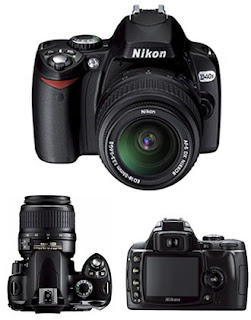
Full Review - Nikon D40x Digital SLR Camera

Nikon's entry-level digital SLR is its most compact SLR camera ever, featuring a 10.2 megapixel CCD and a 2.5 inch LCD screen for crisp, high-resolution photographs and intuitive controls.


Nikon D40x Digital SLR Camera

Nikon Corporation announces the D40X, a new digital SLR camera incorporating a 10.2-megapixel CCD.

While maintaining the compact size and external features of the D40 camera body, the Nikon D40X produces even more outstanding, detailed photos thanks to its 10.2-megapixel CCD and the latest digital technologies. Its resolution power makes it easy for users to print up very large sizes or crop aggressively without having to lose any fine details in their digital photographs. The D40X is loaded with everything you need for truly amazing images: a 10.2-megapixel CCD, Nikon’s exclusive 3D Color Matrix Metering II, an improved Image Processing Engine and superb Auto White Balance. Together with a world-famous Nikkor lens, these features combine to ensure stunning photography with perfect exposure, refined details and natural, vivid colors.

The D40X shares the D40’s ergonomic design and streamlined interface, which means the same intuitive operation that’s simple and fun – even for entry-level photographers. The bright and clear viewfinder ensures precise composition, while the 2.5-inch large LCD monitor utilizes an easy-to-use menu system and a wide viewing angle so that every photographer can navigate their settings and view their images with ease. There is also a handy built-in Help menu: simply press a button and useful information on key features is displayed on the LCD monitor.

The D40X is fast. Its near-instant power-up (0.18 second) and fast, reliable responses help photographers act on the moment, while the continuous shooting mode lets photographers easily capture up to 100 JPEG images of action as fast as 3 frames per second. The camera’s razor-sharp autofocus ensures crisp digital photographs for a wide variety of photographic scenes.

Flash photography is simple with the D40X because the camera employs Nikon’s market-leading i-TTL flash control, which evaluates ideal flash exposure automatically and accurately, even in difficult lighting situations.

Eight Digital Vari-Program modes offer creative shooting options that are optimized for common shooting situations. Fun, fast and simple, they are as easy to use as rotating the mode dial. For further control over aperture and shutter speed, P/S/A/M modes are available.

Exclusive in-camera image editing features are available in the Retouch menu. One of the main features is Nikon’s exceptional D-lighting, which brings out details usually lost in underexposed areas of an image while retaining the proper exposure in brighter areas. Photographers can also correct red-eye easily, or use Monochrome effects to change an image to Black-and-white, Sepia tone or Cyanotype.

Some of the D40X’s major digital photography improvements include an even longer-lasting battery that allows up to 520 images per charge (470 images for the D40), faster continuous shooting at 3 frames per second (2.5 fps for the D40) and a wider ISO sensitivity of 100 to 1600, plus HI 1 (200 to 1600 plus HI 1 for the D40).

While it inherits many advanced digital photography and optical technologies from professional models, the D40X and its sister model, the D40, are Nikon’s smallest, most compact digital SLR cameras. By offering everyone mobility, ease-of-use and incredible photos with great resolution, the D40X welcomes everyone to the world of Nikon digital SLR photography.


Major features

Intuitive, simple and trouble-free operation

  • The most compact Nikon digital SLR camera ever, featuring intuitive controls and ergonomics designed for everyone
  • A large 2.5-inch LCD monitor with easy-to-view menus, large fonts and careful color schemes for easy preview and setting changes
  • Bright and clear viewfinder with 0.8x magnification for precise composition
  • Long-life rechargeable lithium-ion battery that allows up to 520 photos* on a single charge (*CIPA standards)
  • Handy assist images that help photographers select the right camera settings
  • Optional Wireless Remote Control ML-L3 for easy remote shutter release

Superior image quality and resolution

  • 10.2-effective-megapixel digital photos
  • Nikon DX Format CCD imaging sensor, producing 3,872 x 2,592-pixel digital photos
  • High-precision digital image processing algorithms for natural-looking pictures with faithful color and tone reproduction
  • Nikon 3D Color Matrix Metering II for ideal exposures in almost any lighting condition
  • Variable Center-weighted metering and Spot metering centered on the active focus area
  • Auto White Balance for natural colors, plus six different manual white balance settings and user-defined preset white balance

Fast and precise responses

  • Quick 0.18 second power-up to respond to every photographic opportunity
  • Fast continuous shooting mode enables up to 100 JPEG images (FINE L-size or smaller) at 3 frames per second
  • Advanced three-area AF system and refined algorithms for fast, efficient and precise autofocus
  • Versatile shutter speed control ranging from 30 to 1/4000 s., plus bulb

Accurate automated and manual control for predictable results

  • Eight Digital Vari-Programs that adjust camera settings automatically for incredible scene-specific pictures. Selections include Auto, Auto (Flash Off), Portrait, Landscape, Child, Sports, Close Up, and Night Portrait
  • Manual controls over shutter and aperture: P (Programmed Auto), S (Shutter-priority Auto), A (Aperture-priority Auto) and M (Manual)
  • Automatic and manual control over ISO sensitivity from ISO 100 to 1600, as well as HI 1 (manual only)
  • Simultaneous recording of NEF (RAW) and JPEG basic data for the same image
  • Built-in Flash with Nikon’s dependable i-TTL flash control, supporting Auto flash, Red-eye reduction, Slow sync, Rear curtain sync and Flash exposure compensation

Retouch Menu for creative in-camera image edits and effects

  • Selections include D-lighting, Red-eye correction, Trim, Monochrome (Black-and-white, Sepia, Cyanotype), Filter effects (Skylight, Warm filter, Color balance), Small picture and Image overlay

Seamless integration with Nikon Total Digital Imaging System

  • Fully compatible (autofocus is supported) with AF-S and AF-I Nikkor lenses, which are equipped with an autofocus motor (Also compatible with most of the world-famous F-mount Nikkor lenses when in manual focus mode)
  • Supports the Nikon Creative Lighting System when using the SB-800, SB-600, SB-400, SB-R200 or the R1C1 Wireless Close-Up Speedlight system for accurate exposures via i-TTL flash.
  • Nikon’s PictureProject software to share, organize and edit pictures with ease.
  • Capture NX software (available separately) for creative photo editing with NEF (RAW), JPEG and TIFF images. Thanks to U Point™ technology, by Nik Software Inc., radical and subtle image enhancements are as easy as a few clicks

Digital SLR Camera - Nikon D40x

Nikon D40x Digital SLR Camera
The Nikon D40x is designed to be an entry-level SLR camera, first announced in March 2007. Although identical in external packaging to its older brother, the D40, the D40x differentiates itself by featuring a higher resolution 10.2-megapixel CCD sensor, 3-frames-per-second continuous shooting, and a sensitivity range extended down to ISO 100. It also has a longer battery life. However, it has only a 1/200 flash sync speed, reduced from the D40's 1/500.

Nikon says of the D40x, "Nikon’s smallest digital SLR combines a 10.2-megapixel CCD with a simple, intuitive operation designed to take great, high-resolution pictures for everyone." The Nikon D40x features the latest digital technologies one would expect from a Nikon SLR.

The Nikon D40x is the most compact Nikon digital SLR camera available, and features intuitive controls and an ergonomic design. It has a 2.5 inch LCD screen with user-friendly and easy-to-use menus for convenient preview and setting changes. The Nikon D40x comes with an optional wireless remote control for easy remote shutter release.

Other features included in the D40x include Nikon's proprietary 3D Color Matrix Metering II technology that gauges the ideal exposures in any lighting condition, an improved Image Processing Engine, and an advanced Auto White Balance. The near-instant power-up time of 0.18 second also means that the D40x is fast, and the continuous shooting mode allows for "up to 100 images of action as fast as 3 frames per second."

At a Glance
Resolution: 10.2 Megapixels
Dimensions: 5.00 x 2.50 x 3.70 in.
Weight: 1 lb. 1 oz.

Digital Photography News

Digital cameras revolutionized photography in the 1990's, slowly replacing film cameras that had been standard for decades. Digital photography allowed endless experimentation due to its instant results, whereas with film cameras one had had to wait to see their shots.

The ease of use of digital cameras made the the choice equipment for everyone, and with the introduction of high performance digital SLR cameras, digital photography also was an option for serious photographers.

With the wide range of products and tools available today to digital photographers, this site aims to give you all the information you need to make the right choices as well as tips and tricks to produce lasting, powerful images.